MENU


Our laboratory focuses on organisms that utilize light energy for their life activities and systematically analyzes their functional proteins through biophysical and biochemical approaches. This enables us to elucidate the essence of important biochemical phenomena at the molecular level, while also conducting educational and research activities to effectively utilize these findings.
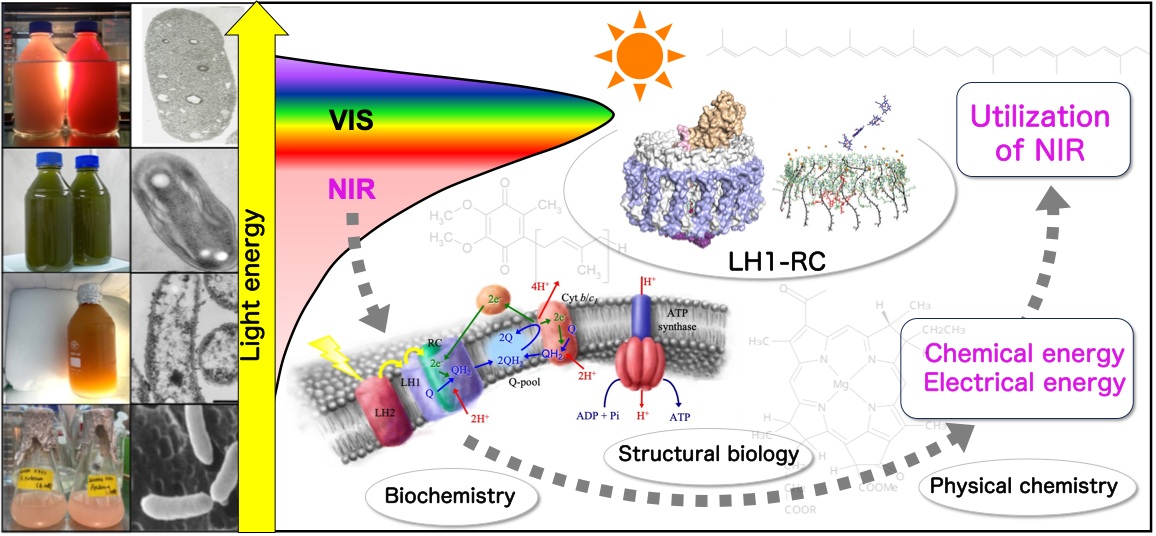
Purple photosynthetic bacteria inhabiting extreme environments : Thermophile, Halophile, Psychrophile, Acidophile (left). Mechanism of near-infrared (NIR) light resource utilization by purple photosynthetic bacteria (right). Purple photosynthetic bacteria can perform photosynthesis using low-energy NIR light that is unused by plants and other phototrophs. The heart of the purple bacterial photosynthesis is the light-harvesting complex 1-reaction center (LH1-RC) pigment-protein complex. We aim to utilize NIR light energy as a available resource by employing biochemical, physicochemical, and structural biological approaches to investigate the structure-function relationship of the LH1–RC complexes.


